Industry News
 Home / News / Industry News / When Should Abrasion Resistant Hot Stamping Foil Be Applied Efficiently?
  2025.12.12
 Industry News
Surface finishing plays a crucial role in determining both the visual and functional qualities of decorative and industrial products. Abrasion Resistant Hot Stamping Foil and Brushed Hot Stamping Foil provide manufacturers with a method to apply detailed textures while maintaining surface durability. Knowing when and how to apply these foils efficiently can help reduce production time, improve consistency, and ensure that finished surfaces remain uniform across multiple items.
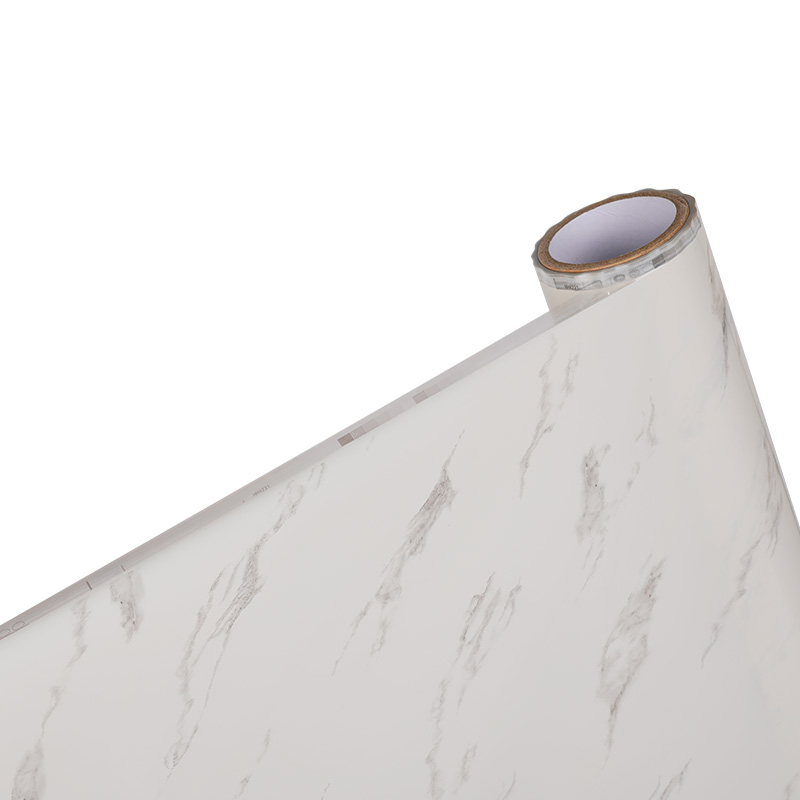
The application of Abrasion Resistant Hot Stamping Foil is effective when surfaces are properly prepared. Clean, smooth substrates such as PS, PVC, MDF, and coated metals provide better adhesion and reduce the risk of peeling or uneven transfers. Applying the foil after primer or base layers have cured can help maintain the integrity of the pattern and prevent contamination from dust or oils. Planning the application step after surface preparation and before final assembly ensures that decorative finishes are not damaged during subsequent handling.
Different substrates respond differently to thermal transfer processes. Brushed Hot Stamping Foil is designed to adapt to flat and curved surfaces, including complex or irregular shapes. Applying the foil when the substrate is at the recommended temperature allows the thermally activated adhesive to bond effectively. This is particularly important for metals with powder-coated or painted surfaces, as well as high-temperature resistant plastics. Aligning the foil type with substrate characteristics helps maintain a smooth, continuous finish across all areas.
Efficiency in application is influenced by the production method used. Thermal transfer with these foils is generally faster than conventional printing, but processing speed should still be balanced with accuracy. Rapid application can be useful for high-volume production runs, while slower, controlled transfers may be preferred for intricate patterns or detailed textures. Establishing a consistent workflow where the foil is applied immediately after surface preparation can reduce downtime and prevent the need for rework.
Abrasion Resistant Hot Stamping Foil and Brushed Hot Stamping Foil release minimal harmful substances during application, making them suitable for indoor production environments. Operators should still ensure proper ventilation and handle the materials according to safety guidelines. Applying the foils in areas with controlled temperature and humidity can help maintain consistent adhesion and prevent issues such as wrinkling, uneven color, or incomplete transfers. Attention to environmental conditions during the application process supports uniform quality across production batches.
After the foil has been applied, allowing sufficient time for the surface to cool or set before handling helps prevent accidental damage. Surfaces that have just undergone stamping can be sensitive to scratches, smudges, or pressure marks. Planning post-application steps such as assembly, packaging, or inspection with this in mind helps maintain the intended texture and appearance. Applying foil efficiently also means coordinating these subsequent steps to reduce unnecessary handling.
Both Abrasion Resistant Hot Stamping Foil and Brushed Hot Stamping Foil can be used on a range of materials and designs, including decorative panels, furniture components, appliances, and metal parts. Efficient application considers the size, shape, and complexity of the item being decorated. For larger or more irregular items, breaking the surface into manageable sections and applying the foil in a controlled sequence can help achieve consistent results. Planning the workflow according to product design and material characteristics can reduce errors and maintain continuous texture.
Knowing when to apply these foils, how to align them with substrate properties, and how to integrate them into the production workflow can improve both the appearance and handling of finished items. Abrasion Resistant Hot Stamping Foil and Brushed Hot Stamping Foil provide practical options for producing decorative surfaces that are visually detailed, maintainable, and consistent across multiple items, supporting a smooth and organized finishing process.

Contact Information
 +86-13665889229
 +86-0579-89123153
 Ditian Industrial Park, Xiaoshun Town, Jindong District, Jinhua City, Zhejiang, China.
Get in Touch
Copyright © Jinhua Zengcai Decoration Materials Co., Ltd. All Rights Reserved.
 Wholesale Hot Stamping Foil


 English
 中文简体
中文简体 عربى
عربى