Industry News
 Home / News / Industry News / What Techniques Improve Results Using Abrasion Resistant Hot Stamping Foil?
  2026.01.02
 Industry News
Applying decorative finishes requires careful attention to both material selection and technique to achieve consistent results. Abrasion Resistant Hot Stamping Foil and Brushed Hot Stamping Foil offer a practical approach for producing textured and patterned surfaces on plastics, metals, and coated substrates. Understanding the methods and conditions that influence transfer quality can help manufacturers and designers achieve surfaces that are visually consistent and durable during handling.
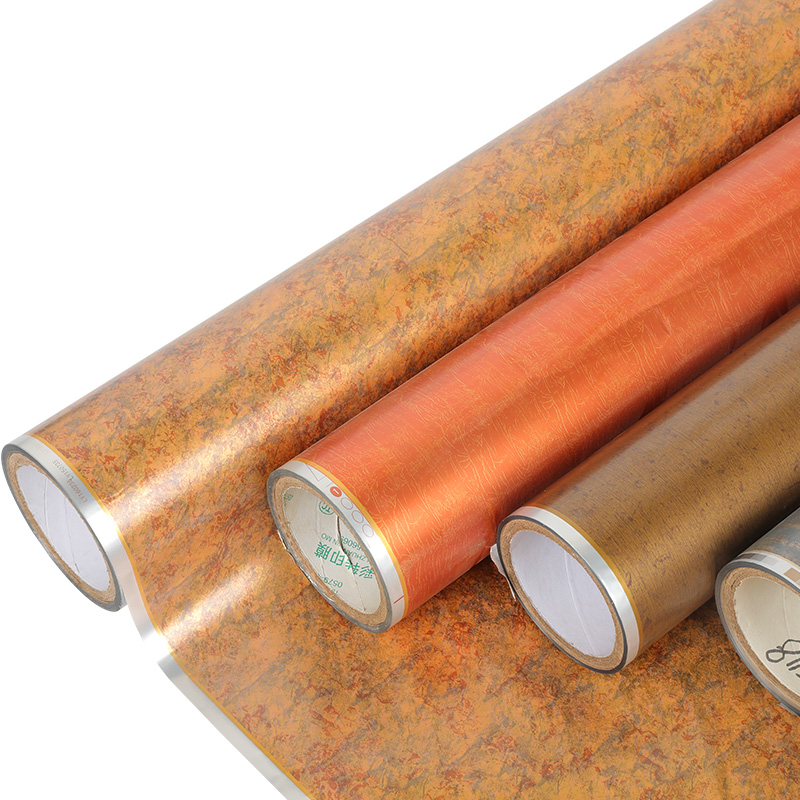
The condition of the substrate significantly affects the quality of the transferred pattern. Surfaces should be clean, smooth, and free from dust, grease, or residues to ensure even adhesion of the foil. Materials such as PS, PVC, MDF, and coated metals respond differently to thermal transfer, so it is important to adjust preparation steps accordingly. For coated or painted surfaces, allowing primer or base layers to fully dry before stamping helps maintain a consistent finish across the entire surface.
Abrasion Resistant Hot Stamping Foil requires controlled heat and pressure for proper adhesion. Applying the foil at the recommended temperature ensures the thermally activated adhesive bonds evenly without causing uneven textures or wrinkles. Pressure should be adjusted to suit the material type and thickness of the foil, particularly when dealing with curved or irregular surfaces. Using consistent temperature and pressure across the production line helps achieve uniform results while reducing surface imperfections.
Brushed Hot Stamping Foil is flexible, making it suitable for surfaces with curves, edges, or irregular forms. Techniques such as applying the foil in sections or following the natural contours of the object can help maintain continuous patterns and reduce stress on the material. Careful alignment and gradual transfer of the foil over detailed areas prevent breaks or inconsistencies in the decorative pattern, supporting a smooth visual effect.
The stage at which the foil is applied can influence the outcome. Applying it after surface treatments, such as cleaning, priming, or painting, ensures a smooth base for transfer. Allowing sufficient cooling or setting time after each step before moving to the next reduces the risk of smudging, lifting, or uneven adhesion. Planning the sequence of production steps to accommodate the foil transfer contributes to consistent results and reduces rework.
Controlled environmental conditions, including temperature and humidity, help maintain uniform adhesion during application. Abrasion Resistant Hot Stamping Foil releases minimal substances during the thermal process, but maintaining a stable workspace supports consistent patterns and reduces the likelihood of adhesion issues. Applying foil in areas with moderate humidity and stable temperature allows the material to bond evenly, producing consistent textures and colors across multiple items.
After the foil is applied, allowing surfaces to set before further handling helps preserve the transferred pattern. Surfaces can then be handled with care during assembly, packaging, or inspection to avoid scratches or pressure marks. Finished surfaces are generally easy to maintain, with dust and minor stains removable through simple wiping. These considerations help preserve the visual and textural quality of decorative items over time.
Both Abrasion Resistant Hot Stamping Foil and Brushed Hot Stamping Foil can be used across various materials and designs, including metals like aluminum and stainless steel. Selecting a foil that matches the substrate and pattern complexity, and applying it with consistent technique, allows for uniform appearance across different project types. Breaking down larger or more intricate surfaces into manageable sections and transferring foil sequentially can also support continuous texture without disrupting the decorative effect.
Applying these techniques provides a structured approach to working with Abrasion Resistant Hot Stamping Foil and Brushed Hot Stamping Foil. By focusing on surface preparation, temperature and pressure control, handling, environmental conditions, and post-application care, manufacturers and designers can maintain a consistent and durable appearance for decorative surfaces, supporting a practical and efficient finishing process.

Contact Information
 +86-13665889229
 +86-0579-89123153
 Ditian Industrial Park, Xiaoshun Town, Jindong District, Jinhua City, Zhejiang, China.
Get in Touch
Copyright © Jinhua Zengcai Decoration Materials Co., Ltd. All Rights Reserved.
 Wholesale Hot Stamping Foil


 English
 中文简体
中文简体 عربى
عربى