Industry News
 Home / News / Industry News / How Bronze Hot Stamping Foil Improves Decorative Accuracy on Paperboards
  2026.05.22
 Industry News
Packaging manufacturers working with folding cartons and rigid paperboards are paying closer attention to surface decoration consistency, especially in cosmetic boxes, wine cartons, gift packaging, and premium retail labels. Wholesale Hot Stamping Foil has become a common material choice for these applications because it supports controlled transfer during the stamping process while maintaining clear edge definition on coated and uncoated paperboards. At the same time, Bronze Hot Stamping Foil is increasingly used where metallic contrast, detailed patterns, and layered textures are required without adding thick surface coatings or additional lamination steps.
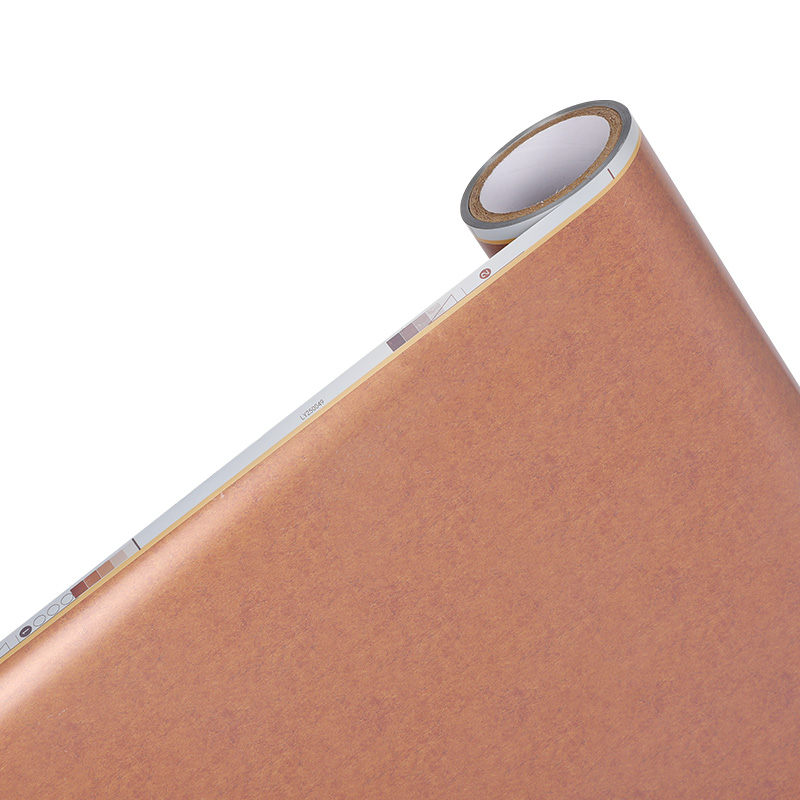
Paperboard packaging often contains small text, thin borders, embossed graphics, or metallic decorative lines that require accurate foil placement. Even slight shifting during hot stamping may result in uneven metallic coverage, blurred corners, or incomplete transfer around detailed artwork. These issues become more visible on darker substrates or textured cartons where reflective surfaces highlight every inconsistency.
Traditional decorative printing methods sometimes struggle when dealing with fine-line graphics on thick paperboards because pressure distribution changes across uneven surfaces. Excessive heat can also affect coating layers, causing slight distortion around foil edges. In large-volume production, repeated heating cycles may gradually influence stamping accuracy if the foil layer is not stable enough during transfer.
Another common issue appears during multi-pass decoration processes. Many paperboard products combine embossing, UV coating, spot varnish, and metallic stamping within the same production cycle. If foil positioning varies between batches, alignment problems may become noticeable after folding or gluing. This is especially important for packaging used in retail displays, where lighting can expose irregular metallic reflections.
Because of these challenges, manufacturers have started selecting foil materials based not only on color appearance but also on release stability, heat tolerance, carrier layer consistency, and compatibility with different stamping pressures.
Recent adjustments in foil coating technology have helped improve decorative control on paperboard surfaces. Bronze Hot Stamping Foil now commonly includes multi-layer constructions designed to maintain cleaner release behavior during heated transfer. The carrier film, release coating, metallic layer, and adhesive layer are balanced to support more stable separation during stamping.
Instead of relying only on high pressure to force metallic transfer, many foil systems now focus on controlled activation temperatures. This allows operators to use lower pressure ranges while still achieving consistent metallic coverage on detailed artwork. Lower mechanical stress can help reduce deformation around small characters or thin decorative lines.
Several production improvements have contributed to more accurate decorative results:
These changes are particularly useful in narrow decorative zones where metallic elements are placed close to folds, embossed sections, or die-cut windows. In these situations, foil movement of even a fraction of a millimeter may affect final visual alignment.
Manufacturers also adjust stamping dies more carefully according to paperboard density and coating thickness. Softer paperboards may require different pressure settings compared to rigid laminated cartons. Using foil materials with balanced release characteristics helps operators maintain similar decorative quality across different substrates without constantly changing machine parameters.
Decorative hot stamping is no longer limited to luxury gift boxes. Bronze metallic finishes are now widely used in everyday packaging categories because they provide visual contrast without requiring large amounts of ink coverage. Bronze Hot Stamping Foil is commonly applied to tea boxes, confectionery packaging, candle cartons, electronics sleeves, fragrance packaging, and promotional rigid boxes.
In cosmetic packaging, manufacturers often combine bronze metallic lines with matte coatings to create layered visual effects. Thin foil borders around logos or product names help separate branding elements from background graphics without increasing print complexity. Because the metallic layer reflects light differently from standard ink, the package surface can appear more structured under retail lighting.
Food packaging applications also use metallic stamping for seasonal collections or limited-edition product lines. Since foil decoration is applied only to selected areas, manufacturers can maintain lightweight carton structures while adding surface variation to specific design elements.
Book covers and stationery packaging have also increased their use of metallic decoration. Foil stamping allows publishers to highlight titles, symbols, or decorative frames without introducing heavy varnish layers that may crack during folding. On textured paperboards, bronze metallic surfaces can provide visible contrast while preserving the original paper texture underneath.
For smaller packaging workshops, Wholesale Hot Stamping Foil purchasing has become more flexible because shorter production runs and customized color selections are now more common. This allows converters to match decorative finishes with seasonal branding updates or regional packaging variations without maintaining excessive material inventory.

Contact Information
 +86-13665889229
 +86-0579-89123153
 Ditian Industrial Park, Xiaoshun Town, Jindong District, Jinhua City, Zhejiang, China.
Get in Touch
Copyright © Jinhua Zengcai Decoration Materials Co., Ltd. All Rights Reserved.
 Wholesale Hot Stamping Foil


 English
 中文简体
中文简体 عربى
عربى