Industry News
 Home / News / Industry News / Wholesale Hot Stamping Foil: Supports Flexible Label Printing Applications
  2026.05.15
 Industry News
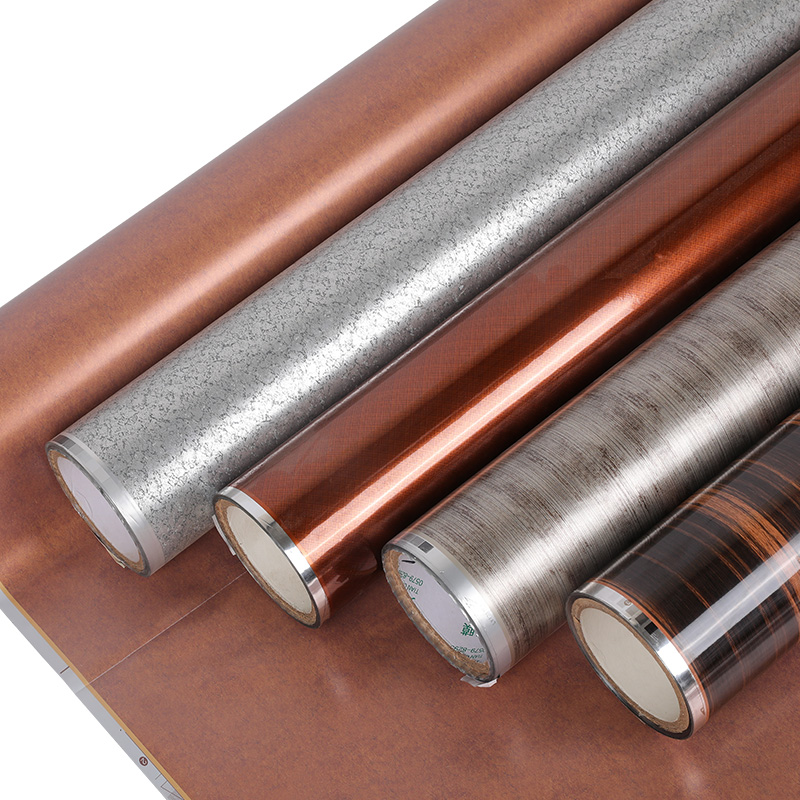
Packaging suppliers and printing workshops continue to adjust production methods as shorter delivery cycles and customized packaging requests become more common. In this environment, Wholesale Hot Stamping Foil is being adopted in a wider range of label printing projects where appearance consistency and material compatibility are important. At the same time, Bronze Hot Stamping Foil remains widely used for paper labels, cosmetic cartons, wine packaging, flexible pouches, and decorative branding surfaces that require metallic texture without changing the original substrate structure.
The growing use of digital printing and mixed-material packaging has also changed how hot stamping materials are selected. Instead of using one foil type for all jobs, converters now pay closer attention to adhesion temperature, substrate adaptability, release performance, and print speed compatibility. This has encouraged more flexible foil specifications for both small-batch and high-volume label production environments.
Label printing applications no longer focus only on decorative appearance. Packaging manufacturers are now dealing with shorter product cycles, more SKU variations, and a wider combination of substrate materials including coated paper, PET film, kraft paper, PP labels, synthetic paper, and laminated surfaces. These changes influence how foil performs during stamping, especially when print shops switch frequently between materials and machine settings.
Traditional foil solutions sometimes create issues such as incomplete transfer, edge breakage, uneven metallic coverage, or unstable adhesion under varying pressure conditions. These issues become more visible in flexible packaging lines where temperature fluctuation and printing speed can differ from one order to another.
Several packaging sectors are seeing increased demand for adaptable stamping materials:
|
Packaging Segment |
Common Substrate |
Foil Performance Concern |
|
Cosmetic labels |
PET film, coated paper |
Surface smoothness and detail clarity |
|
Beverage packaging |
Wet-strength paper |
Abrasion resistance |
|
Flexible food bags |
Laminated film |
Heat compatibility |
|
Pharmaceutical labels |
Synthetic paper |
Fine text transfer |
|
Gift packaging |
Textured paperboard |
Adhesion consistency |
In many production environments, printers are also combining hot stamping with UV printing, embossing, or digital variable data printing. This means foil layers must maintain transfer quality while remaining compatible with multiple finishing processes.
Recent developments in Bronze Hot Stamping Foil production focus more on practical manufacturing compatibility rather than decorative appearance alone. Foil suppliers are adjusting adhesive layers, carrier film thickness, and release coatings to support different stamping temperatures and machine speeds.
One visible change is the wider use of lower-temperature transfer formulations. These formulations help reduce substrate deformation when working with thinner films or heat-sensitive labels. In flexible packaging lines, lower transfer temperatures can also help reduce curling and edge distortion during continuous stamping operations.
Some foil structures are now designed specifically for:
Another production trend involves improving foil consistency during long production runs. Stable release characteristics help reduce interruptions caused by incomplete transfer or foil sticking. This becomes especially important in jobs involving detailed typography, thin line graphics, or repeated logo patterns.
The table below outlines several practical properties commonly evaluated during foil selection:
|
Technical Factor |
Production Influence |
|
Transfer temperature |
Affects substrate stability |
|
Release layer behavior |
Influences transfer cleanliness |
|
Metallic layer density |
Impacts visual consistency |
|
Carrier film thickness |
Related to feeding stability |
|
Abrasion tolerance |
Important for transport packaging |
|
Stamping speed compatibility |
Supports continuous production |
In some printing workshops, operators are also adjusting pressure calibration more carefully because newer packaging materials react differently compared with traditional coated paper. Foil performance therefore depends not only on material composition but also on machine setup accuracy.
The use of metallic foil labeling has expanded beyond premium packaging categories. Mid-range consumer packaging and industrial identification labels are also adopting decorative foil finishes to improve shelf visibility and product differentiation without major structural packaging changes.
Flexible applications are now commonly seen in seasonal packaging projects where frequent artwork updates require short-run production flexibility. Hot stamping foil can support these adjustments because dies and foil rolls can often be changed more quickly than some alternative metallic finishing methods.
Several application areas continue to increase foil usage:
Cosmetic and Personal Care Packaging
Cosmetic brands often combine matte substrates with metallic bronze effects to create contrast on cartons, labels, and tube packaging. Bronze shades are commonly selected because they provide a softer metallic appearance compared with brighter gold finishes. This style is widely used for skincare products, essential oil packaging, and gift sets.
Beverage and Food Labels
Beverage labels regularly experience friction during transport, refrigeration, and handling. Foils used in this sector are therefore evaluated for surface durability and adhesion under humid storage conditions. Bronze tones are frequently applied to coffee packaging, tea labels, craft beverage cartons, and confectionery wrappers.
Pharmaceutical and Healthcare Labels
Some pharmaceutical packaging uses foil stamping for batch information zones, security patterns, or product differentiation. In these applications, transfer precision becomes more important than decorative intensity because text clarity directly affects readability.
Flexible Packaging Pouches
Flexible pouches often involve laminated materials that react differently to heat. Foil products designed for lower transfer temperatures are increasingly used here to help maintain substrate flatness and reduce wrinkling near stamped areas.

Contact Information
 +86-13665889229
 +86-0579-89123153
 Ditian Industrial Park, Xiaoshun Town, Jindong District, Jinhua City, Zhejiang, China.
Get in Touch
Copyright © Jinhua Zengcai Decoration Materials Co., Ltd. All Rights Reserved.
 Wholesale Hot Stamping Foil


 English
 中文简体
中文简体 عربى
عربى