Industry News
 2026.05.29
 Industry News
Packaging converters and print manufacturers continue adjusting decorative processes to reduce visible abrasion during foil transfer, especially on coated paperboards, laminated cartons, and synthetic label surfaces. Wholesale Hot Stamping Foil is widely used in these applications because stable transfer layers can help lower friction between the heated die and substrate during stamping. Bronze Hot Stamping Foil has also become common in packaging lines that require metallic decoration while maintaining cleaner surface conditions around logos, borders, and embossed graphics.
Foil stamping introduces both heat and pressure to the substrate surface within a short production cycle. When transfer conditions are not balanced correctly, visible wear may appear around decorative areas. Common signs include scratched coatings, pressure marks, dull metallic patches, fiber lifting on paperboards, or slight surface deformation near fine graphic details.
This issue becomes more noticeable on dark coatings, matte laminations, and textured cartons because reflective metallic finishes highlight even minor surface irregularities. High-speed stamping equipment can increase this risk if foil release behavior changes during long production runs. As the stamping die repeatedly contacts the substrate, uneven transfer resistance may gradually affect decorative consistency.
Paperboard density also influences surface wear. Softer carton materials may compress more easily under pressure, while rigid laminated boards can experience coating stress if excessive heat is applied during transfer. In some cases, metallic foil edges become rough because the adhesive layer activates unevenly across textured surfaces.
Decorative wear is not limited to paper packaging. Plastic covers, book jackets, greeting cards, and synthetic labels may also show rubbing marks when foil transfer conditions are unstable. This is especially important for products handled frequently during transportation, assembly, or retail display preparation.
Because of these challenges, manufacturers are paying closer attention to foil layer construction instead of focusing only on metallic color appearance.
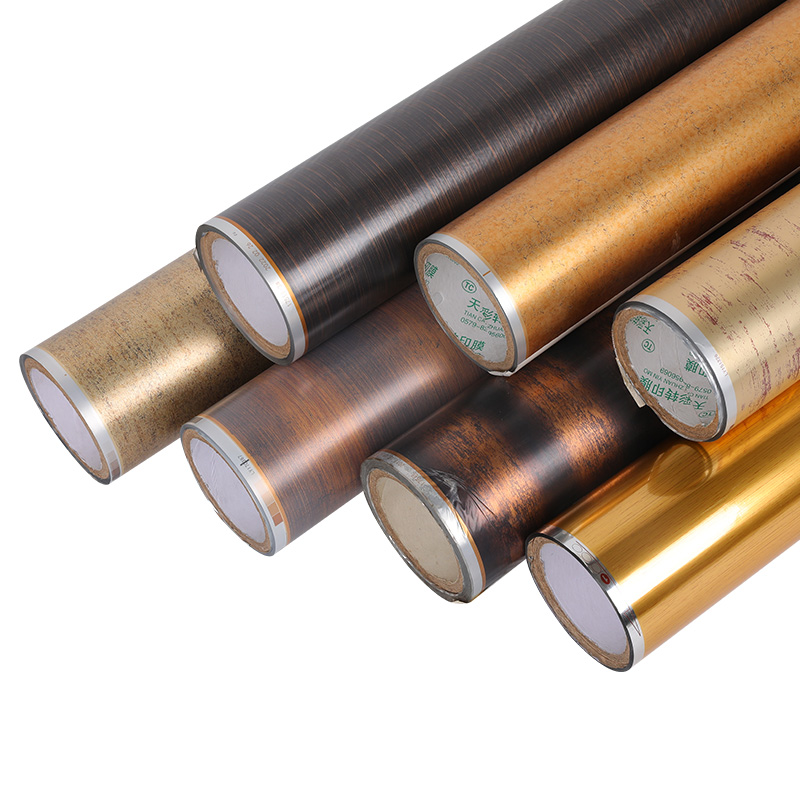
Recent developments in Bronze Hot Stamping Foil structures focus on reducing excessive friction during the transfer stage. Instead of depending entirely on higher stamping pressure, newer foil constructions are designed to release more evenly at controlled temperatures. This helps reduce unnecessary contact stress between the die surface and the substrate coating.
Several technical changes contribute to smoother transfer behavior:
These adjustments allow operators to use more balanced machine settings without relying on excessive pressure to complete metallic transfer. Lower mechanical stress may help reduce visible rubbing marks around decorative edges, especially when stamping small text or thin graphic lines.
Temperature control also plays an important role. Foil systems designed for lower activation ranges can reduce overheating risks on sensitive coatings. Matte laminated cartons, for example, may show gloss changes if exposed to unnecessary heat for extended periods. Controlled transfer behavior helps preserve the original substrate appearance outside the decorative zone.
Another improvement involves die compatibility. Certain foil materials now perform more consistently with engraved brass dies and silicone-based counter materials, helping distribute pressure more evenly during detailed stamping jobs.
Metallic decoration is now used across a broader range of retail packaging categories, including cosmetics, confectionery, tea boxes, wine cartons, electronic accessories, and stationery products. Many of these applications require smooth metallic finishes without visible rubbing or coating disturbance because packaging surfaces are often viewed under strong retail lighting.
Cosmetic cartons are one example where surface wear can affect visual presentation. Metallic decorative borders are commonly stamped onto soft-touch laminated paperboards, which are more sensitive to pressure marks than standard coated cartons. Using foil materials with smoother release behavior helps reduce visible stress around stamped logos or typography.
Rigid gift boxes also benefit from balanced transfer conditions because thick board structures often combine embossing, foil stamping, and magnetic closures within the same assembly process. If decorative wear appears during stamping, it may become more visible after folding and box assembly.
In publishing and stationery packaging, metallic decoration is frequently applied to textured book covers and presentation folders. Rough paper textures increase contact variation during transfer, which can create uneven metallic surfaces if the foil layer does not release consistently. Stable foil behavior helps preserve texture detail while reducing surface disruption around stamped areas.
Flexible packaging labels have also increased their use of bronze metallic decoration. Labels used for candles, bottles, and specialty foods often contain narrow metallic elements positioned close to printed graphics. Reduced surface wear becomes important because even slight scratching may affect barcode readability or branding appearance.
Several packaging workshops have observed lower decorative rejection rates after adjusting foil transfer settings together with updated foil materials. One medium-sized carton manufacturer processing coated cosmetic boxes reported fewer surface scratches near embossed logos after reducing stamping pressure and switching to a foil structure with smoother release behavior.
Another printing facility handling textured paperboard covers compared two bronze foil systems during repeated stamping runs exceeding several thousand impressions. Operators noted that one foil structure maintained more stable metallic transfer near textured grain patterns while showing fewer dull patches around graphic edges.
Short-run packaging production has also benefited from controlled transfer materials because smaller orders often require multiple substrate changes throughout the day. Operators working with coated cartons, kraft paperboards, and laminated rigid boxes prefer foil materials that adapt to different surfaces without major pressure adjustments.
In label production, converters have reported that balanced foil release characteristics help reduce rubbing marks during rewinding and stacking. Since labels are often handled immediately after production, smoother metallic transfer can help maintain decorative consistency before final application onto containers or retail packaging.
Although machine calibration, die condition, and substrate quality still strongly influence final results, foil construction remains an important factor in controlling decorative wear during transfer operations.

Contact Information
 +86-13665889229
 +86-0579-89123153
 Ditian Industrial Park, Xiaoshun Town, Jindong District, Jinhua City, Zhejiang, China.
Get in Touch
Copyright © Jinhua Zengcai Decoration Materials Co., Ltd. All Rights Reserved.
 Wholesale Hot Stamping Foil


 English
 中文简体
中文简体 عربى
عربى