Industry News
 Home / News / Industry News / How Can PVC Hot Stamping Foil Create Realistic Stone And Metal Effects?
  2026.01.16
 Industry News
Decorative finishes that mimic natural stone or metallic surfaces have become increasingly common in modern manufacturing. PVC Hot Stamping Foil and Heat Resistant Hot Stamping Foil are materials designed to provide a practical way to apply such effects on plastic, composite, and other compatible substrates. These foils allow manufacturers to produce visually consistent patterns while taking into account environmental exposure and material limitations. Understanding how these foils work can help improve surface appearance and reduce issues during production.
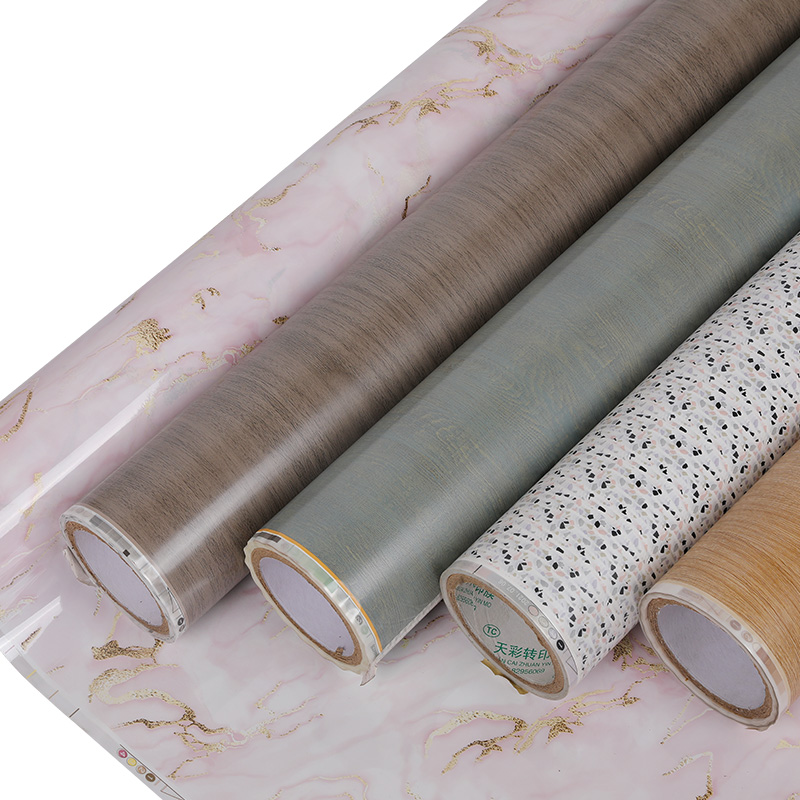
Achieving realistic stone or metal effects requires precise control over the transfer process. PVC Hot Stamping Foil adheres to substrates through heat and pressure, ensuring the decorative layer bonds with the surface without deforming it. Heat Resistant Hot Stamping Foil can handle higher processing temperatures, which is useful for substrates that experience elevated heat during molding or production. Adjusting parameters such as temperature, pressure, and dwell time according to the foil type and substrate ensures that the pattern transfers evenly, avoiding incomplete coverage or surface irregularities.
These foils are versatile in their applications. PVC Hot Stamping Foil works effectively on materials such as WPC, PVC panels, and ABS components, while Heat Resistant Hot Stamping Foil accommodates surfaces exposed to higher thermal conditions. Some foil variants can also be applied to metal or wood, allowing the same decorative effect across different materials within a project. Considering substrate texture and existing coatings is essential, as these factors can influence adhesion and pattern clarity.
The visual appeal of stone and metal finishes depends on how well the foil reproduces depth, texture, and color variation. Patterns are often pre-printed or embossed on the foil, which transfers to the surface during stamping. Proper control during the process ensures that the texture aligns correctly with the design, and the color maintains its intended appearance. Repeating the pattern consistently across multiple panels or components helps maintain uniformity in architectural or industrial applications.
PVC and Heat Resistant Hot Stamping Foils are designed to withstand environmental factors such as sunlight, moisture, and temperature fluctuations. While the foils are not impervious to wear, their composition helps retain the clarity and vibrancy of decorative effects over time. This stability is important for outdoor applications such as decking, fencing, and architectural panels, where materials are exposed to varying weather conditions. Selecting the right foil type for the expected environment can reduce surface degradation and maintain the appearance of the decorative layer.
Consistent results depend on proper handling and process control. Temperature settings should match the foil’s characteristics, and pressure should be adjusted to avoid over-compression or deformation of the substrate. Heat Resistant Hot Stamping Foil allows slightly higher temperatures without affecting the substrate, which can be helpful when producing materials with thicker or textured surfaces. Regular monitoring and adjustment of the process parameters help maintain uniform transfer quality across production batches.
These foils are suitable for a wide range of applications. In construction and exterior design, they provide stone or metallic finishes for panels, fencing, and cladding without requiring heavy material changes. In consumer goods, foils offer consistent decorative patterns on plastic components, enhancing visual appeal and providing a durable decorative surface. By choosing the appropriate foil type, manufacturers can achieve the desired aesthetic effect while accommodating different substrates and production conditions.
Using PVC and Heat Resistant Hot Stamping Foils can support uniform decorative finishes, especially in large-scale production. Compared to painting or other coating methods, foils offer repeatable patterns with reduced variability. Proper storage and handling of foils also contribute to consistent transfer performance, ensuring that each batch of products meets the intended visual and textural standards. Over time, following recommended application practices helps preserve the appearance of stone and metal effects, keeping surfaces visually coherent across different production runs.

Contact Information
 +86-13665889229
 +86-0579-89123153
 Ditian Industrial Park, Xiaoshun Town, Jindong District, Jinhua City, Zhejiang, China.
Get in Touch
Copyright © Jinhua Zengcai Decoration Materials Co., Ltd. All Rights Reserved.
 Wholesale Hot Stamping Foil


 English
 中文简体
中文简体 عربى
عربى