Industry News
 2026.01.23
 Industry News
Surface decoration in manufacturing has evolved beyond basic patterns and textures, with PVC Hot Stamping Foil and Heat Resistant Hot Stamping Foil offering practical solutions for adding visual appeal and texture to a variety of substrates. These foils are applied to materials such as PVC, WPC, ABS, and certain composites, providing a way to transfer detailed designs efficiently. Understanding how and where these foils can be applied helps manufacturers expand their decorative options while maintaining consistent production standards.
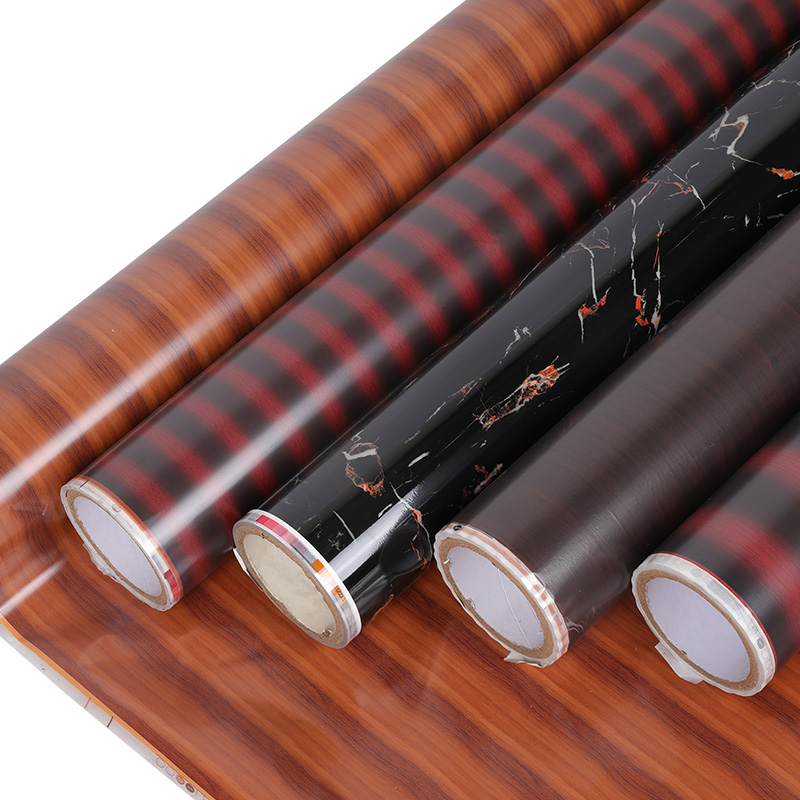
PVC Hot Stamping Foil is commonly applied to plastic and composite surfaces, where it can produce effects ranging from metallic sheens to stone-like textures. Heat Resistant Hot Stamping Foil allows for application on substrates that experience higher temperatures during production or subsequent use. Beyond plastics, certain foil variants can be used on metal or wood, creating opportunities to standardize decorative effects across multiple materials in the same product line. Considering the compatibility of foils with different textures and coatings is important for achieving even transfer and surface quality.
The construction and architectural industries benefit from hot stamping foils in various ways. Decking panels, fencing, and cladding can carry decorative finishes that replicate wood grains, stone patterns, or metallic surfaces without requiring additional coating steps. Using Heat Resistant Hot Stamping Foil for materials exposed to sunlight or high surface temperatures helps maintain design consistency. By incorporating these foils, manufacturers can expand the variety of surface finishes available for exterior and interior applications.
Consumer products also provide opportunities for PVC Hot Stamping Foil use. Plastic housings, covers, or panels for electronics can feature textures or metallic patterns applied through hot stamping. Heat Resistant Hot Stamping Foil enables designs to withstand assembly processes or environmental conditions that involve moderate heat exposure. This approach allows manufacturers to add visual differentiation to products while keeping production steps manageable.
Choosing the appropriate foil type is important for production efficiency and surface quality. PVC Hot Stamping Foil typically works well with moderate temperature settings, suitable for common plastic substrates. Heat Resistant Hot Stamping Foil accommodates slightly higher temperatures, supporting materials that may deform under standard heat conditions. Controlling parameters such as pressure and dwell time helps ensure uniform adhesion, preventing defects like incomplete transfer or surface distortion. Monitoring these factors can maintain consistent results across production batches.
Beyond standard metallic or stone textures, foils can carry detailed patterns, logos, or subtle textures that enhance product design. By experimenting with different foil finishes and embossing patterns, manufacturers can expand the range of decorative effects without changing the base material. This flexibility allows for consistent aesthetic quality across components or products made from different substrates, providing more options for product differentiation and design variety.
Hot stamping foils are designed to maintain appearance under environmental exposure, such as sunlight, moisture, or moderate temperature changes. While they are not fully impervious to wear, using the appropriate foil type can help maintain surface clarity and texture over time. Considering the expected environmental conditions of the end product helps select the right material and application process, supporting long-term surface performance without excessive maintenance or adjustments.
For manufacturers producing large quantities of decorative components, consistency is a key concern. Hot stamping foils allow repeated patterns to transfer uniformly, reducing variability compared to painting or coating processes. Proper handling and storage of foils further support uniform performance, ensuring that each production run achieves similar visual and textural results. This predictability is valuable for applications where repeated patterns and textures are required across multiple batches.
The practical versatility of PVC and Heat Resistant Hot Stamping Foils opens possibilities for expanding decorative applications in manufacturing. From construction materials and consumer electronics to automotive interior panels and furniture components, these foils can introduce textures and patterns in areas previously limited to simpler finishes. By understanding material compatibility, process requirements, and design goals, manufacturers can broaden the scope of decorative effects without extensive changes to production equipment or base materials.

Contact Information
 +86-13665889229
 +86-0579-89123153
 Ditian Industrial Park, Xiaoshun Town, Jindong District, Jinhua City, Zhejiang, China.
Get in Touch
Copyright © Jinhua Zengcai Decoration Materials Co., Ltd. All Rights Reserved.
 Wholesale Hot Stamping Foil


 English
 中文简体
中文简体 عربى
عربى