Industry News
 Home / News / Industry News / How Does Heat Resistant Hot Stamping Foil Withstand High Temperatures?
  2026.01.30
 Industry News
Manufacturers often encounter situations where surface decoration must endure elevated temperatures during production or in end-use conditions. PVC Hot Stamping Foil and Heat Resistant Hot Stamping Foil provide ways to apply patterns and textures while addressing thermal challenges. These foils are used on materials such as PVC, WPC, ABS, and certain composites, allowing consistent transfer of designs even when surfaces are exposed to higher heat levels. Understanding how these foils function under temperature stress helps optimize decoration processes and maintain design consistency.
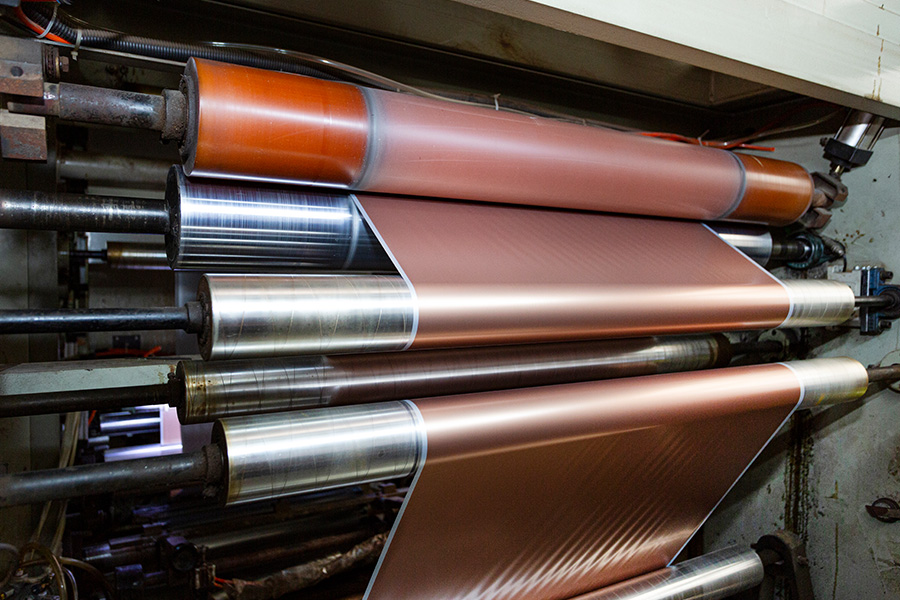
Heat Resistant Hot Stamping Foil is formulated with polymers and additives that allow it to maintain its structure at elevated temperatures. Unlike standard foils, it can resist softening or distortion during the stamping process. PVC Hot Stamping Foil, while suitable for moderate temperatures, requires careful control to avoid deformation. The heat resistant variants are designed to accommodate higher processing conditions, which makes them suitable for substrates that experience thermal exposure during molding, assembly, or outdoor installation. The composition ensures that the decorative layer adheres without compromising the texture or clarity of the transferred pattern.
Achieving a successful transfer of heat resistant foil depends on precise control of temperature and pressure. Too low a temperature may result in incomplete adhesion, while excessive heat can affect the substrate or foil integrity. Heat Resistant Hot Stamping Foil is designed to tolerate a wider range of temperatures without losing its pattern definition. Adjusting dwell time and pressure according to the substrate and foil type ensures even transfer, reducing the risk of bubbling, wrinkling, or partial adhesion. Proper process management allows repeated results across multiple batches.
These foils are compatible with various materials commonly used in industrial and decorative applications. PVC, WPC, and ABS surfaces are frequently treated with these foils for exterior panels, decking, or consumer products. Some heat resistant variants are also suitable for metal or wood surfaces, which allows the same decorative effect across different materials. Surface preparation is important: smooth, clean, and dry surfaces support even transfer, while textured or coated surfaces may require adjustments in temperature and pressure to achieve uniform adhesion.
One of the challenges with high-temperature applications is preserving the clarity of intricate designs. Heat Resistant Hot Stamping Foil is engineered to retain its embossed or printed textures during exposure to heat. By controlling processing parameters and selecting the right foil for the substrate, manufacturers can maintain pattern details and color consistency. This is particularly relevant for stone, metallic, or textured finishes, where the visual effect depends on precise surface reproduction.
While heat resistant foils are designed to tolerate higher temperatures, environmental factors such as UV exposure, moisture, and surface wear also affect long-term performance. Choosing a foil that matches the intended usage conditions helps maintain surface appearance over time. For example, panels exposed to sunlight or outdoor conditions may benefit from foils formulated for UV stability while still accommodating thermal resistance. Understanding the interaction between temperature and environmental exposure supports better material selection and surface design outcomes.
In practice, consistent results depend on handling, storage, and process calibration. Heat Resistant Hot Stamping Foil should be stored in conditions that avoid excessive humidity or temperature fluctuation before use. During stamping, monitoring temperature and pressure ensures that each application achieves uniform adhesion without affecting the substrate. Manufacturers can also test small batches under expected thermal conditions to confirm foil performance before large-scale production. This reduces variability and helps maintain uniform quality across multiple components.
The ability to withstand higher temperatures allows heat resistant foils to be applied in areas where standard foils may fail. This includes exterior panels, decorative components on consumer products, and parts exposed to thermal processes during assembly. By selecting the appropriate foil and adjusting the stamping process, manufacturers can expand decorative applications while preserving surface texture and design clarity. The combination of PVC Hot Stamping Foil for moderate temperatures and Heat Resistant Hot Stamping Foil for higher temperatures provides flexibility in production planning.

Contact Information
 +86-13665889229
 +86-0579-89123153
 Ditian Industrial Park, Xiaoshun Town, Jindong District, Jinhua City, Zhejiang, China.
Get in Touch
Copyright © Jinhua Zengcai Decoration Materials Co., Ltd. All Rights Reserved.
 Wholesale Hot Stamping Foil


 English
 中文简体
中文简体 عربى
عربى