Industry News
 Home / News / Industry News / How Does Plastic Hot Stamping Foil Perform on Complex Surface Materials?
  2026.04.10
 Industry News
Working with irregular shapes and textured substrates often raises questions about consistency and finish quality. In practical production environments, Plastic Hot Stamping Foil and Heat Resistant Hot Stamping Foil are frequently selected for decorating plastics, coated metals, and composite materials that present curved, uneven, or detailed surfaces. Their behavior on such substrates depends on multiple interacting factors, including material compatibility, process parameters, and surface conditions. Understanding these factors helps users make informed decisions and reduce trial-and-error during application.
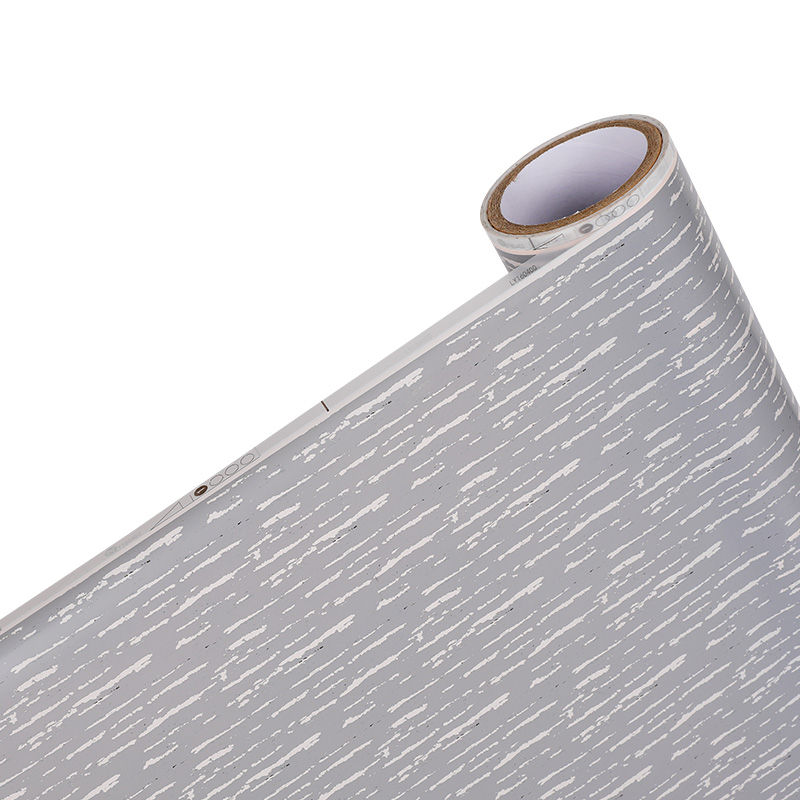
Complex surface materials generally include curved geometries, embossed textures, fine grooves, or multi-layer coatings. These features influence how the foil transfers from the carrier film to the substrate. On flat surfaces, pressure and heat distribution are relatively uniform, while on curved or textured areas, localized variations can affect adhesion and clarity.
For example, raised patterns may receive more pressure than recessed areas, and materials with micro-textures can trap air or reduce effective contact between foil and substrate. In such cases, the performance of the foil depends on how well its adhesive layer responds to temperature and pressure variations. Heat resistant variants are often considered in these scenarios because they maintain stable transfer behavior under slightly fluctuating thermal conditions.
Hot stamping foil is typically composed of several layers, including a carrier film, release layer, decorative layer, and adhesive layer. Each layer contributes to how the foil behaves during transfer, especially on complex surfaces.
The adhesive layer plays a central role. It softens under heat and bonds with the substrate. When dealing with uneven surfaces, a well-balanced adhesive formulation can adapt to slight differences in pressure distribution. Meanwhile, the release layer ensures that the decorative layer separates cleanly from the carrier film without distortion.
Heat resistant hot stamping foil is designed to maintain its structural stability when exposed to higher or fluctuating temperatures. This becomes useful when working with materials that require longer dwell times or higher heat input to achieve proper bonding, such as engineering plastics or coated components.
Achieving consistent results on complex surfaces requires attention to several processing parameters. These variables often need adjustment compared to flat surface applications:
Higher temperatures may improve adhesion in recessed or textured areas, but excessive heat can distort fine details or affect substrate integrity.
Uniform pressure is more difficult to achieve on curved surfaces. Flexible silicone dies or customized tooling can help improve contact.
Slightly longer dwell times allow the adhesive layer to flow into textured regions, improving transfer completeness.
Choosing between standard and heat resistant foil depends on substrate sensitivity and required processing window.
Balancing these factors is often a matter of controlled testing rather than fixed settings, especially when working with new materials or designs.
Complex surfaces are often found across a range of materials, each with its own characteristics. Plastic hot stamping foil behaves differently depending on the substrate composition and surface treatment.
On injection-molded plastics such as ABS or polypropylene, surface energy plays a role in adhesion. Pre-treatment methods like corona or flame treatment may be used to improve bonding. For coated or painted surfaces, compatibility between the foil adhesive and coating layer becomes important.
Heat resistant foils are sometimes used on materials that require higher processing temperatures, such as polycarbonate or certain composites. These foils can handle extended exposure to heat without degrading the decorative layer, helping maintain visual consistency across the surface.
Can occur if the foil stretches unevenly over curved sections.
Typically seen where surface transitions are sharp or tooling does not conform closely.
Differences in substrate composition or coating thickness can cause uneven bonding.
Addressing these challenges usually involves adjusting tooling design, refining process parameters, or selecting a foil with properties better suited to the application.

Contact Information
 +86-13665889229
 +86-0579-89123153
 Ditian Industrial Park, Xiaoshun Town, Jindong District, Jinhua City, Zhejiang, China.
Get in Touch
Copyright © Jinhua Zengcai Decoration Materials Co., Ltd. All Rights Reserved.
 Wholesale Hot Stamping Foil


 English
 中文简体
中文简体 عربى
عربى