Industry News
 2026.04.17
 Industry News
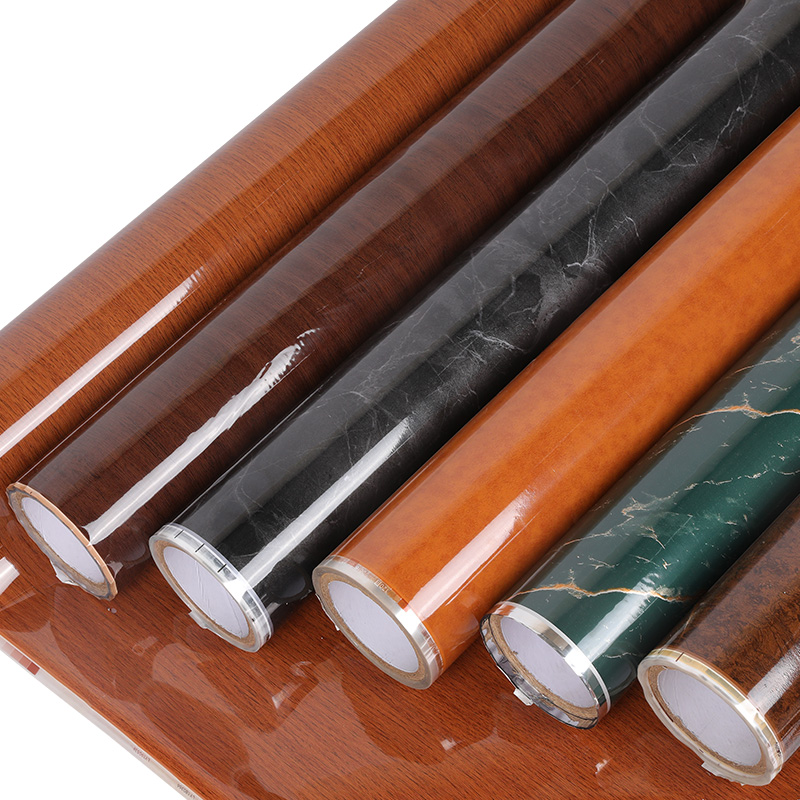
Food packaging lines operate under conditions where temperature, speed, and material compatibility all interact within a narrow process window. In such environments, Plastic Hot Stamping Foil and Heat Resistant Hot Stamping Foil are often selected for marking, decorating, or coding packaging surfaces that must remain stable during sealing, filling, and handling. Their role is not only visual but also functional, as they must perform consistently while exposed to heat, pressure, and contact with different packaging substrates.
Food packaging processes frequently involve thermal sealing, sterilization steps, or hot filling. These conditions introduce elevated temperatures that can affect how decorative or functional layers behave on the packaging surface. Standard foils may begin to soften or lose definition when exposed to prolonged heat, especially if the substrate itself retains heat after sealing.
Heat resistant hot stamping foil is designed to maintain layer integrity during these stages. It can withstand temperature fluctuations that occur between sealing jaws, conveyor transitions, and cooling zones. This stability helps ensure that printed information such as batch codes, branding, or simple decorative elements remains intact rather than smearing or fading due to residual heat.
Plastic hot stamping foil is also widely used in this field, particularly on plastic containers, lids, and flexible films. Its compatibility with common packaging polymers makes it suitable for applications where moderate heat exposure is present, while heat resistant variants are often chosen when processing temperatures are higher or dwell times are longer.
During food packaging, heat is applied not only for sealing but sometimes for sterilization or pasteurization. These processes can temporarily raise the surface temperature of packaging materials beyond what is seen in standard decorative applications.
When foil is applied before or after such steps, it must tolerate:
If the foil cannot handle these conditions, issues such as color distortion, incomplete adhesion, or layer separation may occur. Heat resistant hot stamping foil is structured to maintain its decorative layer and adhesive performance within a broader temperature range, which reduces the likelihood of these issues under typical packaging line conditions.
In practical use, several factors explain why heat resistant variants are commonly selected for food packaging lines:
Packaging often passes through heated sealing jaws. Foils that tolerate these temperatures are less likely to show deformation or loss of clarity after sealing.
Food packaging lines usually run at high speeds, which limits the time available for cooling. Heat resistant foil can maintain its structure even when cooling is brief.
Packaging materials may include PET, PP, PS, or laminated films. Heat resistant foil can be adjusted to bond with these materials under different thermal conditions.
Variations in temperature across the line can affect transfer consistency. A foil that performs across a wider temperature range helps reduce inconsistencies.
Some packages undergo additional handling such as stacking, transport, or light exposure to warm environments. Foil stability during these stages helps maintain the intended appearance.
These points are often considered during material selection, especially when packaging designs include detailed markings or require consistent readability.
Food packaging involves a variety of materials, each presenting different challenges for foil application. Plastic hot stamping foil is frequently used on rigid containers such as yogurt cups, bottle caps, and trays, where the surface is relatively uniform but still subject to heat during sealing.
Flexible packaging films introduce additional variables, such as stretching, bending, and surface coatings. When foil is applied to laminated films, the adhesive layer must interact properly with the outer layer, which may include coatings designed for barrier properties or printability.
Heat resistant foil is often selected when these materials are exposed to higher temperatures or when the packaging process includes steps that temporarily soften the substrate. Its ability to maintain consistent transfer helps reduce defects such as partial adhesion or visual irregularities.
Applying foil in a food packaging line requires coordination between material properties and machine settings. Temperature, pressure, and dwell time must be aligned with both the foil and the substrate.
Unlike decorative applications on stable surfaces, packaging lines may not allow for extensive adjustments once production begins. Therefore, selecting a foil that can perform under a slightly broader range of conditions provides more flexibility.

Contact Information
 +86-13665889229
 +86-0579-89123153
 Ditian Industrial Park, Xiaoshun Town, Jindong District, Jinhua City, Zhejiang, China.
Get in Touch
Copyright © Jinhua Zengcai Decoration Materials Co., Ltd. All Rights Reserved.
 Wholesale Hot Stamping Foil


 English
 中文简体
中文简体 عربى
عربى