Industry News
 Home / News / Industry News / Why Can Heat Resistant Hot Stamping Foil Handle Multi-Layer Packaging Needs?
  2026.04.24
 Industry News
Packaging structures have gradually evolved from single-layer materials to multi-layer combinations that serve different functional purposes such as barrier protection, sealing strength, and printability. Within this context, Plastic Hot Stamping Foil and Heat Resistant Hot Stamping Foil are often used to apply markings or decorative elements onto packaging surfaces that are no longer uniform in composition. Their ability to perform on multi-layer materials is closely linked to how they respond to heat, pressure, and varying surface properties across laminated structures.
Multi-layer packaging typically consists of two or more materials bonded together, such as plastic films, aluminum layers, paper substrates, or functional coatings. Each layer is selected for a specific role. For example, one layer may provide mechanical strength, while another offers moisture or oxygen resistance, and an outer layer may be designed for printing or decoration.
This layered structure introduces complexity for hot stamping processes. The outer surface may appear uniform, but underlying layers can influence how heat is distributed and retained. Some materials dissipate heat quickly, while others hold it longer, which affects how the adhesive layer of the foil interacts with the surface during transfer.
Heat resistant hot stamping foil is often used in such cases because it can maintain stable behavior even when heat transfer through the layers is uneven. This helps achieve more consistent results when working with laminated packaging.
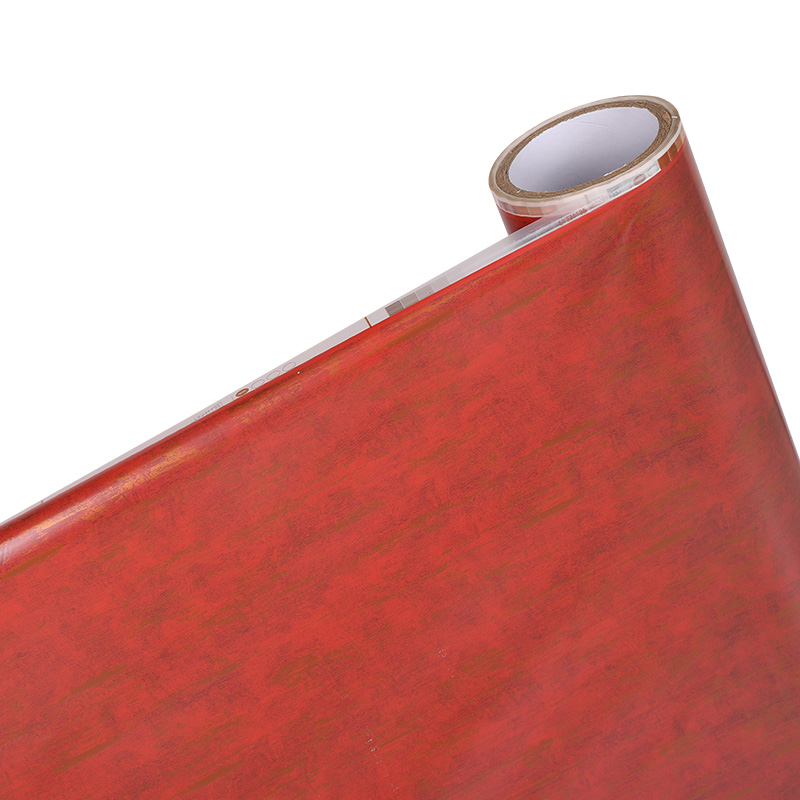
When hot stamping is applied to multi-layer packaging, heat must pass through the foil and interact with the outermost layer of the substrate. However, the presence of additional layers beneath can change how that heat behaves. For instance, a laminated film with an aluminum layer may reflect heat differently compared to a purely plastic structure.
Pressure distribution is also affected. Multi-layer materials can vary in flexibility depending on their composition. Some laminated films are more rigid, while others remain flexible. This influences how evenly the foil makes contact with the surface during stamping.
Heat resistant hot stamping foil is designed to tolerate these variations. Its adhesive layer can respond to a range of temperatures without significant changes in transfer behavior, which is useful when working with materials that do not heat evenly.
The adhesive layer in hot stamping foil determines how well the decorative layer bonds to the substrate. On multi-layer packaging, the outer surface may include coatings such as lacquer, varnish, or treatment layers that are applied to improve printability or protection.
These coatings can differ significantly between packaging types, even within the same production line. As a result, the adhesive layer must be able to interact with different surface chemistries. Heat resistant foil typically features an adhesive formulation that remains stable under varying thermal conditions, allowing it to bond with coated or laminated surfaces without requiring constant adjustment.
Plastic hot stamping foil is still used in many applications where the outer layer is relatively straightforward, such as standard plastic films. However, when additional layers introduce variability in heat behavior, heat resistant variants are often considered.
From a production perspective, several practical considerations explain why heat resistant hot stamping foil is chosen for multi-layer packaging applications:
Laminated materials may heat unevenly due to differences in thermal conductivity between layers. Heat resistant foil can function within a wider temperature range, helping maintain transfer consistency.
Many multi-layer packages include surface coatings that affect adhesion. Foils designed for heat resistance are often compatible with these coatings under varying process conditions.
Packaging lines often operate continuously, leaving limited time for cooling or parameter adjustments. Heat resistant foil can accommodate small fluctuations during operation.
Minor changes in pressure or dwell time can occur in industrial settings. A foil that maintains stable performance under these variations can help reduce inconsistencies.
Multi-layer structures are used in pouches, lids, wraps, and rigid containers. Heat resistant foil can be applied across these formats with fewer changes in setup.
These factors contribute to its frequent use in environments where material diversity and processing conditions are not always uniform.

Contact Information
 +86-13665889229
 +86-0579-89123153
 Ditian Industrial Park, Xiaoshun Town, Jindong District, Jinhua City, Zhejiang, China.
Get in Touch
Copyright © Jinhua Zengcai Decoration Materials Co., Ltd. All Rights Reserved.
 Wholesale Hot Stamping Foil


 English
 中文简体
中文简体 عربى
عربى