Industry News
 2026.03.20
 Industry News
Creating decorative surfaces that maintain their appearance over time requires careful consideration of materials and processes. PVC Hot Stamping Foil and Bronze Hot Stamping Foil are commonly chosen for applications where consistent color and pattern transfer are important. These foils can be applied to wood, plastic, and composite surfaces, offering flexibility across production environments. Achieving durable color involves attention to substrate preparation, transfer parameters, and environmental conditions to ensure that the design remains visually consistent without excessive wear or fading.
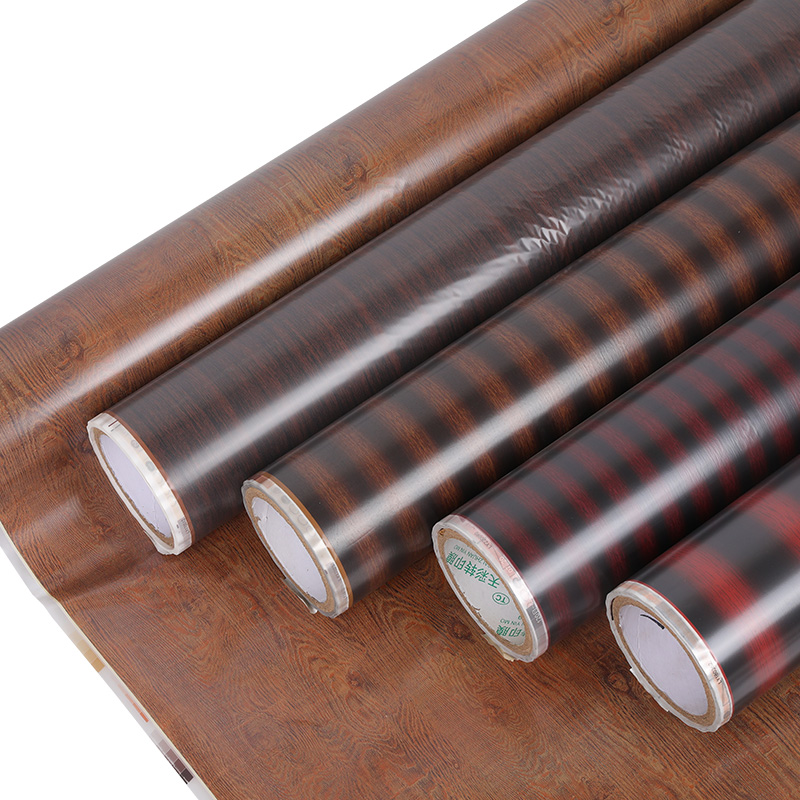
Surface preparation plays a significant role in how well hot stamping foils adhere to materials. Plastic surfaces such as PVC and ABS should be clean, smooth, and free of residues from molding or handling. A mild solvent wipe can remove oils and improve adhesion. For wood or composite panels, light sanding and dust removal can reduce uneven texture that could interfere with the foil’s contact with the substrate.
Not all bronze foils respond the same way to different substrates. Selecting a variant that is compatible with the surface type helps maintain color over time. Practical aspects to consider include:
The transfer process requires careful control of temperature, pressure, and dwell time. For PVC Hot Stamping Foil, maintaining moderate heat and steady pressure helps embed the pattern without deforming the plastic. Bronze foils on wood may require slightly higher temperatures and adjusted pressure to account for grain texture. Uniform pressure distribution across the stamping area prevents gaps and ensures even color coverage. Adjusting dwell time based on surface texture helps avoid incomplete transfer or uneven color intensity.
Maintaining the appearance of stamped surfaces involves practical steps that extend the usable life of the design. These include:
Some bronze foil variants can be applied to both plastic and wood surfaces, simplifying inventory and production planning. Operators should assess the performance of a given variant on each substrate and make small adjustments to temperature or pressure as necessary. Using versatile foils reduces the need for multiple specialized types, while small-scale trials help confirm consistent color results before full production runs.
Temperature, humidity, and exposure conditions can influence the transfer quality and longevity of stamped color. Higher humidity may increase the dwell time required for proper adhesion, while lower temperatures might necessitate slightly higher heat. For semi-outdoor applications, selecting foils with moderate resistance to sunlight and moisture ensures the stamped color remains stable. Understanding the production environment allows operators to configure machines appropriately and maintain predictable outcomes across different materials.
Choosing the right bronze hot stamping foil and controlling the application process are essential steps for preserving color and pattern on plastic, wood, or composite surfaces. Practical attention to preparation, transfer settings, and environmental factors allows operators to maintain visual quality while reducing rework and material waste.

Contact Information
 +86-13665889229
 +86-0579-89123153
 Ditian Industrial Park, Xiaoshun Town, Jindong District, Jinhua City, Zhejiang, China.
Get in Touch
Copyright © Jinhua Zengcai Decoration Materials Co., Ltd. All Rights Reserved.
 Wholesale Hot Stamping Foil


 English
 中文简体
中文简体 عربى
عربى