Industry News
 2026.03.25
 Industry News
Achieving a uniform decorative finish on plastic and wood surfaces requires attention to both material selection and the stamping process. PVC Hot Stamping Foil and Bronze Hot Stamping Foil are commonly used in applications where consistent color and pattern transfer are important. Their versatility across different substrates, from furniture panels to signage and composite products, makes them practical for diverse production environments. Consistent results rely on proper surface preparation, careful selection of foil variants, and controlled application conditions to maintain appearance across multiple production runs while reducing material waste.
The preparation of the surface significantly affects how the foil adheres and how uniform the color appears. Plastic substrates such as PVC and ABS should be clean and free of residues from molding or handling, as oils and dust can interfere with adhesion. Wiping the surface with a mild solvent or cleaner can enhance the contact between the adhesive layer and the material. Wooden and composite panels benefit from light sanding to smooth out rough areas and remove loose fibers. These steps ensure that the foil makes consistent contact with the surface, helping the stamped design transfer evenly and preventing irregularities in color or pattern coverage.
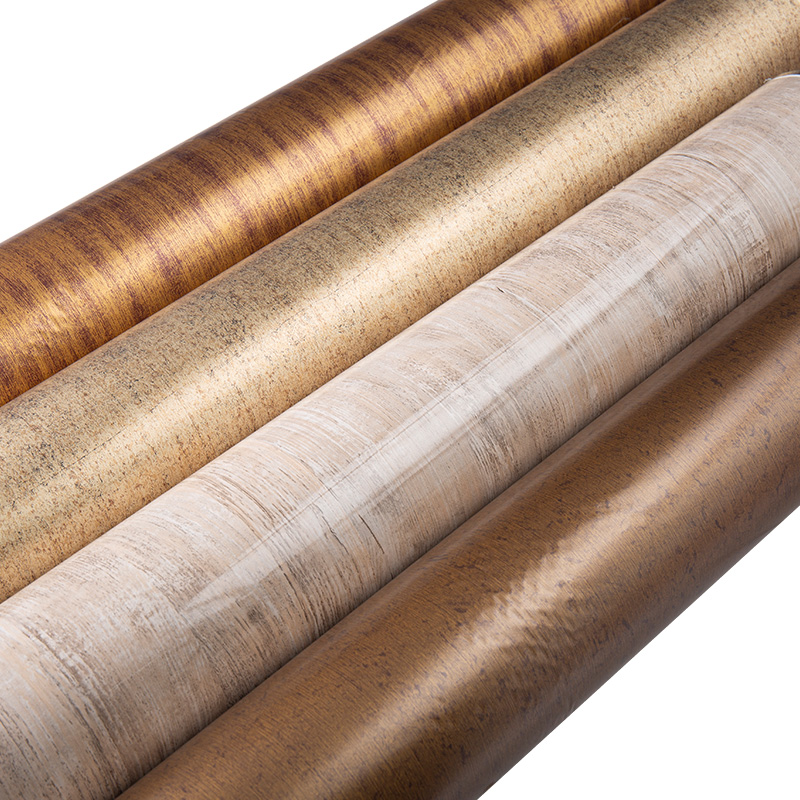
Choosing the right bronze foil variant is essential to achieve predictable results on different substrates. Variants differ in adhesive type, thickness, and heat requirements, which affect their performance on plastic, wood, and composite materials. Some foils are formulated to bond effectively with smooth plastic surfaces, while others are better suited for the texture and grain of wood. Foil thickness influences how well it conforms to surface variations; thicker foils adapt to minor irregularities, while thinner foils produce sharper patterns on flat surfaces. Color stability is another important factor, as foils with consistent pigmentation help maintain uniform appearance across multiple transfers. Following the manufacturer’s recommended temperature range and pressure settings reduces the risk of partial adhesion or uneven finishes.
The stamping process itself requires careful attention to temperature, pressure, and dwell time. For PVC Hot Stamping Foil, moderate heat and steady pressure are generally sufficient to embed the design without causing surface deformation. Bronze foils applied to wood often require slightly higher temperatures and careful adjustment of pressure to account for natural grain texture. Maintaining uniform pressure across the stamping area ensures even color coverage, while appropriate dwell time allows the adhesive to bond fully to the substrate. Regular calibration of stamping machines is necessary to ensure that these parameters remain consistent across production batches and that each transfer meets visual expectations.
Bronze hot stamping foils are used in a range of applications where uniform appearance is required. Decorative panels for furniture and cabinetry benefit from consistent patterns, as do interior trims and moldings. Plastic decking, railings, and fencing components often require precise color and design transfer, as do interior signage, nameplates, and branding on composite materials. Even minor inconsistencies in foil application can affect visual quality, making the selection of appropriate foil variants and control of the stamping process critical. Plastic surfaces generally allow finer detail to appear clearly, while wood or composite substrates may diffuse intricate patterns slightly, requiring attention to foil selection and transfer settings.
While hot stamping provides a durable decorative layer, proper handling and environmental awareness are important for maintaining consistent results. Stamped surfaces should be kept clean and free from dust or abrasive particles. Production environments with controlled temperature and humidity reduce variations in adhesion and color across batches. Proper storage of foil rolls prevents changes in flexibility or adhesive performance before use. Small-scale trials before full production runs allow operators to adjust temperature, pressure, or dwell time according to the specific substrate, reducing waste and ensuring consistent visual outcomes. Avoiding harsh chemicals or abrasive cleaning methods helps preserve both the foil and the substrate.
Environmental factors such as ambient temperature, humidity, and exposure conditions can influence the stamping process and the longevity of the decorative layer. High humidity may increase the time required for the foil to bond effectively, while cooler temperatures may require slight adjustments to heat. Semi-outdoor or exposed applications benefit from foils that are moderately resistant to sunlight and moisture, which helps maintain uniform color over time. Awareness of these conditions allows operators to configure stamping equipment appropriately and to anticipate potential variations in transfer quality, helping achieve consistent results even in variable production environments.

Contact Information
 +86-13665889229
 +86-0579-89123153
 Ditian Industrial Park, Xiaoshun Town, Jindong District, Jinhua City, Zhejiang, China.
Get in Touch
Copyright © Jinhua Zengcai Decoration Materials Co., Ltd. All Rights Reserved.
 Wholesale Hot Stamping Foil


 English
 中文简体
中文简体 عربى
عربى