Industry News
 2026.03.13
 Industry News
For manufacturers and designers working with decorative surfaces, choosing the right hot stamping foil is crucial for both aesthetics and durability. PVC Hot Stamping Foil and Bronze Hot Stamping Foil are widely used in applications ranging from interior panels to outdoor signage. Their ability to transfer detailed patterns onto diverse materials like wood, plastic, and composite surfaces makes them practical for production environments that demand consistent results. Understanding the differences between variants, transfer requirements, and material compatibility helps streamline the application process while maintaining visual quality over time.
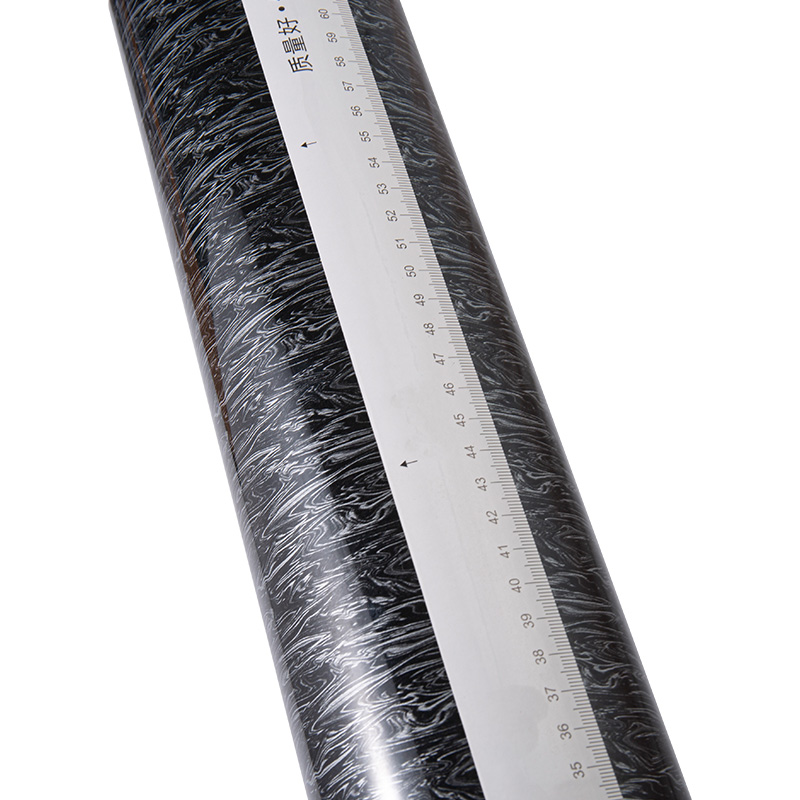
Hot stamping foils interact differently depending on the substrate. PVC and ABS surfaces typically allow smooth transfer due to their uniform texture, while wood and composite panels may require additional surface treatment. For wooden surfaces, light sanding and cleaning with a dry cloth can reduce uneven adhesion. Plastic surfaces often benefit from a mild solvent wipe to remove oils or mold release agents that could interfere with the transfer process. Proper preparation ensures that the foil maintains its intended color and pattern, particularly in outdoor or UV-exposed applications.
Not all bronze hot stamping foils behave the same on wood and plastic. Some formulations are designed specifically for flexible materials like PVC, whereas others accommodate denser substrates such as wood or composite panels. Practical considerations when selecting a variant include:
Adhesive Type: Some foils use heat-activated adhesives suitable for plastic surfaces; others employ pressure-sensitive layers better suited for textured wood.
Foil Thickness: Thicker foils tend to handle rougher surfaces more effectively, while thinner foils are often better for flat, smooth substrates.
Temperature Range: Each variant has a recommended heat range for transfer. Staying within this range prevents partial adhesion or surface distortion.
Color Consistency: Bronze foils vary in hue and reflectivity. Choosing a variant with consistent pigmentation ensures uniform results across multiple batches.
Environmental Resistance: Certain variants withstand moderate UV exposure and moisture, making them suitable for semi-outdoor applications.
The success of hot stamping depends on several process parameters. Temperature, pressure, and dwell time should be adjusted according to the foil type and substrate. For PVC Hot Stamping Foil, moderate temperature and steady pressure allow detailed designs to adhere without causing warping. Bronze variants may require slightly higher temperatures on wood to ensure that the adhesive bonds properly into the grain. Pressure must be uniform across the design to prevent gaps or uneven metallic finishes. Automated or manual stamping equipment can be calibrated to match the recommended settings of each foil variant.
Bronze hot stamping foils are used in a variety of applications where visual detail is important. Some common uses include:
Decorative panels for cabinetry and furniture
Each application requires attention to how the foil interacts with surface texture. Smooth plastics allow sharper pattern transfers, while wood surfaces may display subtle texture that affects the final appearance.
While hot stamping foils provide a decorative finish, maintaining their appearance over time involves practical steps. UV exposure and outdoor moisture can gradually alter color intensity, so choosing a variant with moderate weather resistance is helpful for semi-exterior applications. Regular cleaning with a soft, dry cloth prevents dust or particles from scratching the surface. Avoid harsh chemicals that could interact with the foil layer. In production, keeping foil rolls and sheets in a controlled environment reduces curling or adhesion problems before use.
For operations that involve both wood and plastic, selecting a foil variant that performs adequately on both substrates simplifies inventory and workflow. Some bronze foils are versatile enough to handle moderate variations in surface texture while maintaining a visually uniform finish. Testing small sample areas before large-scale stamping is recommended to determine the consistent transfer parameters. Adjusting machine settings slightly for each material type can reduce waste and ensure each item meets visual expectations.
Temperature and humidity in the production area can influence adhesion. Higher humidity may increase dwell time needed for proper transfer, while cooler temperatures may require slight adjustments in heat. Outdoor exposure of stamped surfaces calls for variants with enhanced resistance to fading and abrasion. Understanding the environmental context allows operators to select foils and configure their equipment for predictable outcomes.

Contact Information
 +86-13665889229
 +86-0579-89123153
 Ditian Industrial Park, Xiaoshun Town, Jindong District, Jinhua City, Zhejiang, China.
Get in Touch
Copyright © Jinhua Zengcai Decoration Materials Co., Ltd. All Rights Reserved.
 Wholesale Hot Stamping Foil


 English
 中文简体
中文简体 عربى
عربى